What the Metal Remembers: Five Wear Points That Log a Bo'ness Run
There is a moment after the last run at Bo'ness when the hill goes quiet, the trailers queue up, and the car sits there ticking as it cools. That is when the metal starts talking. Not in a dramatic, fail-on-the-line sort of way, but in the small, grubby details that tell you exactly what the day asked of it.
A hillclimb car is a record of its run. The driver remembers the line, the marshals remember the noise, and the timing gear remembers the number. The car remembers everything else. By the time November 2026 settles in and the workshop heater gets its first proper outing, those memories are worth reading properly.
Here are five wear points that tend to tell the clearest Bo'ness stories — and what to look for before the winter rebuild season gets into full swing.
Brakes: The Long Arm of the Finish Line
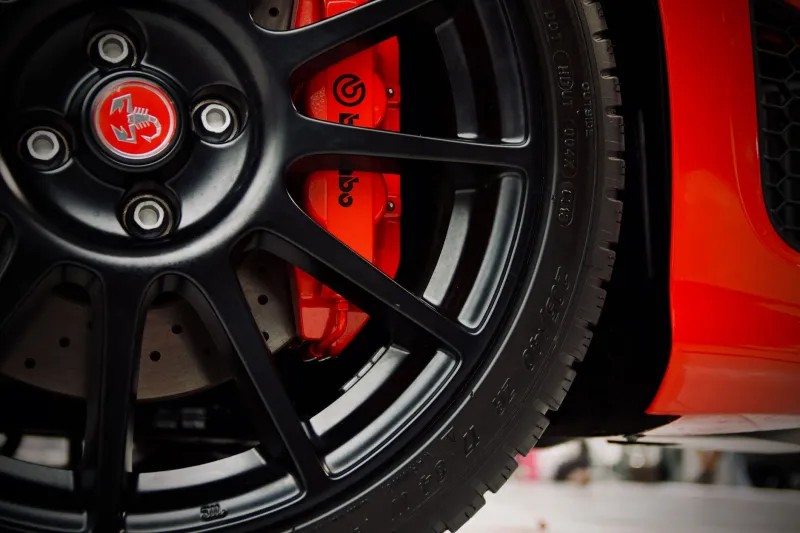
Bo'ness is not a long circuit, but it is a busy one. The run up the hill is a series of short, sharp decisions, and the braking zones arrive quickly. By the time a car has done a handful of runs, the brakes have usually given away more about the driver than the driver would like to admit.
Look for uneven pad wear first. A set that is worn thin on one side and barely touched on the other can point to a sticking caliper, a lazy piston, or a driver who is trail-braking deeper into the top hairpin than the car really enjoys. Glazed pads tell a different tale: short runs, cold brakes, and perhaps a bit too much patience on the pedal. Bo'ness rewards commitment, but it also punishes a brake system that never gets a proper chance to work.
Check the fluid as well. Dark, cloudy fluid after a meeting is not unusual, but it is a reminder that heat has been cycling through the system. If the pedal went long at any point during the day, the car is telling you something worth listening to. A winter strip-down is the right place to deal with it — not the start line at the next meeting.
Clutch: The Quiet Cost of a Standing Start
Hillclimbs are hard on clutches in a way that circuit racing often is not. Every run begins from rest, and every start asks the clutch to convert a standing car into a moving one without drama. Do that repeatedly with a hot engine, a steep incline and a driver who wants a clean getaway, and the clutch takes the strain.
A clutch that has done a hard meeting may still feel fine on the road, which is exactly why it is easy to ignore. Look for a high biting point, a slight smell of hot friction material in the paddock, or a pedal that has lost some of its usual consistency. Pull the inspection cover if the car has one, and look for dust and glazing. Neither is a catastrophe, but both are evidence.
The story here is usually about preparation as much as driving. A well-adjusted clutch and a clean release bearing make a hill start feel simple. A tired one turns every green light into a small negotiation. If the car has been doing a lot of standing starts at Bo'ness, the clutch is one of the first places to give the winter rebuild a purpose.
Tyres: The Blackboard of the Whole Run
Tyres are the most honest part of the car. They cannot exaggerate and they cannot hide. A set of tyres after a Bo'ness meeting will show you where the car was working, where it was sliding, and where the driver was perhaps asking a little too much of the outside shoulder.
Start with the front tyres. On a hill like Bo'ness, the front-left often takes a particular beating through the turns, and the wear pattern will tell you whether the car is rolling too much, understeering, or simply being driven with enthusiasm. Look for flat-spotting too. A single Lockheed moment under braking can leave a mark that stays with the tyre long after the heat has gone out of it.
Then check pressures and temperatures if you have the notes. A car that ran soft pressures and still looked overworked may have a geometry issue, or a driver who is fighting the wheel rather than guiding it. The rear tyres tend to tell a quieter story, but they are worth reading all the same. Uneven wear across the tread can point to a tired differential, a worn bush, or a suspension setting that suited the road but not the hill.
Exhaust: Heat, Ground and the Shape of the Hill
Exhausts on hillclimb cars lead a hard life. They deal with heat cycles, ground clearance, and the occasional close encounter with a kerb or a steep transition. At Bo'ness, the surface and the gradient mean the exhaust is often working harder than it would on a flat sprint course.
Look for scraping along the underside of the pipes and silencer. A few scuffs are normal on a low car, but fresh, bright marks suggest the car is grounding somewhere it should not. That is worth tracing before it becomes a crack. Check the manifold and downpipe area for heat discolouration and loose fittings. A blow at the manifold gasket can be subtle at idle and obvious under load, and it can rob a car of both power and composure.
Also look at the hangers. Rubber mounts can stretch or split after a meeting, and a sagging exhaust can quickly become a cracked one. It is not glamorous work, but it is exactly the sort of thing the winter rebuild is for. The exhaust is part of the car's voice, and a Bo'ness car should sound as healthy as it looks.
Chassis: The Story Underneath
Finally, the chassis. This is where the big picture lives. A hillclimb car will always show some evidence of use, but the pattern of that evidence matters. Look at the mounting points, the suspension pickups and the areas around the jacking points. Clean metal and fresh paint can hide a lot, but they can also tell you where someone has been busy.
At Bo'ness, the car is constantly working through changes of gradient and surface. That makes bushes, ball joints and mounts worth a close look. A small amount of play can feel like nothing on the road and like everything on the hill. Check the steering rack and the column joints too. A car that has been driven with commitment will often show it first in the steering, long before it shows it in the bodywork.
And do not ignore the obvious. Stone chips, mud traps and the odd bit of localised surface rust are part of the record. They tell you where the car has been and what it has been asked to do. The trick is to separate honest wear from neglected wear. One is a story; the other is a warning.
Reading the Car Before the Spanners Come Out
None of this replaces a proper inspection, and none of it is a reason to panic. The point is to read the car while the meeting is still fresh. Take photographs, make notes, and resist the urge to clean everything straight away. The grime and the marks are evidence. Once the winter rebuild begins, they are much easier to explain than to remember.
A Bo'ness car carries the hill with it long after the trailer doors close. The brakes, clutch, tyres, exhaust and chassis are all part of that record. Read them properly, and the winter work will have a direction. Ignore them, and the car will simply keep the story to itself until the next start line.