Two Bags, One Hatchback: The Quiet Work of a Bo'ness Support Crew
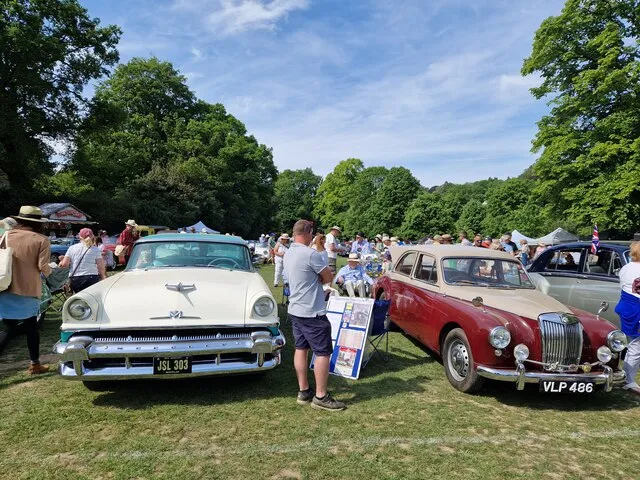
Photo: Basher Eyre , CC BY-SA 2.0, via Wikimedia Commons
Half six on a Sunday morning, a lay-by somewhere between the motorway and the town, and a hatchback with its boot open. Inside: two holdalls, a folded gazebo that has never been used, a cool bag, a pair of wellingtons, and a driver eating a banana with the studied calm of someone who has already mentally driven the hill four times.
The helper is doing the thing helpers do — checking the tyre pressures on the trailer wheels, then on the car, then standing for a second looking at the sky. It's the least photographed role in hillclimbing and, at Bo'ness, arguably the one that decides whether a weekend is remembered fondly.
The smallest viable team
Most club-level entries at Bo'ness run on two people: a driver and one body. Occasionally three, when there's a parent along to hold the camera, but the working model is two. That means the helper is simultaneously transport manager, tyre technician, timekeeper, cook, weather forecaster, and the only person on site whose job is to look at the driver's face and decide what to say.
“A single-seater looks like a one-man show,” one regular who has campaigned the same car for well over a decade told us. “It isn't. If I turn up on my own with a trailer, I've already lost half an hour before practice trying to do two jobs in different places.”
What's actually in the bags
Ask a dozen support crews and you get a dozen slightly different answers, but the core overlap is startling: a decent tyre pressure gauge (two, in fact, one good one and one that lives in the car), a foot pump or a small compressor, a torque wrench, a box spanner, cable ties, gaffer tape, a roll of blue paper towel, a litre of oil, a litre of water, brake cleaner, gloves, and a full change of clothes.
The weather-dependent items are where the character of the crew shows. A thermos is universal. Soup in a flask is common. A stubby umbrella and a waterproof jacket that is actually waterproof, rather than shower-resistant and optimistic, is the mark of someone who has done this in October before.
Then there's the paperwork bag: entry confirmation, licence, scrutineering sheet, insurance details, and a printed entry list. Signal at the venue is patchy, and a printed list turns a confusing field of unfamiliar cars into something you can follow.
The gauge is a moral instrument
Tyre pressures at Bo'ness drift through a day, and the front-left that was right at nine o'clock is not right at two. A support crew that checks between runs, notes them down, and adjusts for a warming surface is worth several seconds over the course of a weekend — and more importantly, keeps the car predictable for the person driving it.
“You're not making the car faster out there,” one helper put it. “You're making it the same every run. That's all a driver really wants: the same car, again and again, so the only variable is them.”
The five minutes before
Every crew develops a routine before a run, and most of them share a rule: after the car is warmed, the belt is tight and the pressures are set, nobody talks to the driver about anything other than the essentials.
Helmet, gloves, HANS if fitted, belts done up in the right order, extinguisher pin in place, bonnet latched and checked twice by two different people. Then a quiet minute. Someone holds the marshal's line. Someone holds a jacket. The helpful person who has been joking all morning suddenly understands that the joke isn't required just now.
This is the part of the job that doesn't appear on any list: reading the driver. Some want banter right up to the line. Some want silence and a thumbs-up. Getting it wrong once teaches you for a season.
Food, wind and the long wait
A hillclimb weekend is mostly waiting. Between the first practice and the last timed run there are hours in which the crew's real work is logistics: joining the queue for the paddock, keeping an eye on the running order, watching the timing screens, and knowing when the car actually needs to be somewhere.
At Bo'ness, the wind on the exposed parts of the brae has a reputation. Layers, a hat, and a willingness to stand in the same spot for forty minutes are more useful than a fancy tool kit. Bacon rolls and a flask do the rest.
And then there's the drive home. If the helper is also the one hitching the trailer, the day ends with a cold, careful twenty minutes in a dark car park — straps checked, lights checked, and a driver who is tired in a way that anyone who has spent six hours in a hillclimb car will recognise. That decision, whether the driver is fit to tow or whether the helper drives, is part of the job too. Nobody talks about it much. It's just what two people do.