Shotgun Up the Brae: Notes From the Other Seat
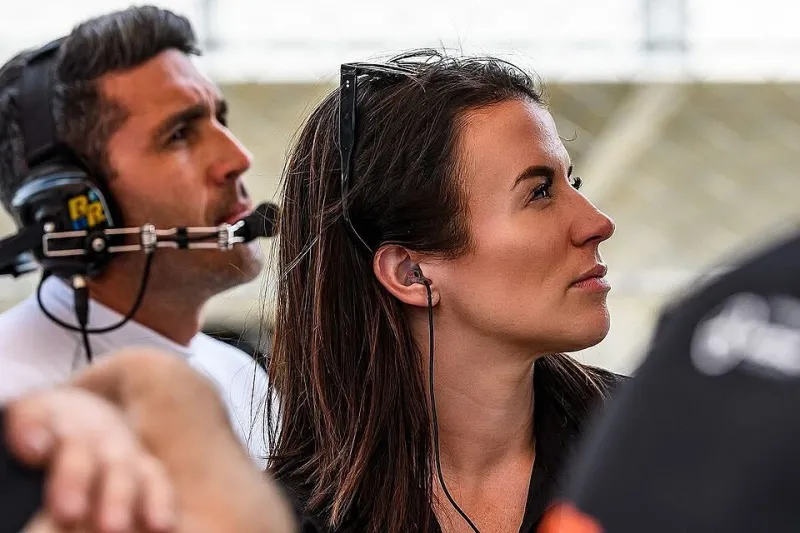
Photo: PassengerPrincess17, CC BY 4.0, via Wikimedia Commons
There is a particular noise an engine makes when the driver asks it for something it hasn't got. I'd heard it from the bank for years, half-drowned by wind and whoever was shouting beside me. Last season I heard it properly, about four inches from my left ear, with my shoulders wedged against a roll bar and my knees somewhere near my chin.
I had been going up to the brae for the best part of a decade as a spectator. I knew the shape of the hill, the way the sound arrives before the car does, the spot where people always gather and the spot where the smart ones stand. I thought that added up to understanding. It didn't. It added up to knowing what a climb looks like. Riding shotgun taught me what it feels like, and those are two different sports.
The bit nobody films
The run itself was the shortest part of the day. What sticks is the queue at the start: the marshal with the board, the engine idling high to keep itself cool, the driver doing up a glove for the fourth time. From the bank you see a car sitting still. Inside, you can feel the whole machine wanting to be somewhere else. Every fan cycle, every tick from a hot exhaust, every stone under a tyre comes through the seat frame and into your spine.
And then the hand drops, and the noise stops being a noise and becomes a pressure. That was the first shock. On the bank you hear a car leave the line. Inside, you feel the front lift and the whole thing squat and go, and your helmet knocks softly against the headrest, and your only job is to keep your hands where you were told to keep them.
The hill, at height
Spectators see the climb in flat layers: the straight, the bend, the crest, the finish. Passengers see it as a fast-moving argument between a driver and a surface. Things arrive much quicker than the eye expects. A marshal's post that takes you three seconds to walk past takes about a blink to clear. The camber that looks gentle from behind the rope gives the car a shove you feel in your ribs.
I had assumed the famous parts of the hill would be the memorable ones. They weren't. What I remember is a scruffy stretch of tarmac that I'd never once looked at from the outside, because from the bank it's the boring bit between two interesting ones. From inside, it's where the car goes light and the driver's hands get busy.
What the hands do
This is the part I had genuinely never seen. From the fence, a good climb looks almost lazy — one turn in, one turn out, a straight bit, another turn. It looks like something you could copy.
Up close, a good climb is a stream of tiny, almost apologetic corrections. Half an inch of steering here because the car has drifted a tyre's width. A short, sharp lift that lasts less time than a blink. A dab of brake that isn't really braking, more a suggestion. The wheel moves constantly, but almost none of it is dramatic. It's the driving equivalent of a steady hand on a tray of drinks.
Related to that: the eyes. A passenger gets to watch where the driver is looking, and it's never where the car is. It's always forty or fifty metres up the road, into a place the car hasn't got to yet. Once you notice that, you can't un-notice it, and you start doing it yourself from the bank like an idiot.
The trust question
The strange thing about a passenger run is how quickly your brain stops asking whether this is sensible. For the first hundred metres you are aware of the wall, the drop, the fence, all of it. Somewhere after that, your attention narrows to the noise and the line, and you hand over. Not because you're brave. Because there is nothing else to do with your hands.
What that taught me about nerve was oddly reassuring. The drivers who look fearless from the bank aren't fearless. They are extremely busy. There is no room in the cockpit for the sort of daydreaming that a spectator's imagination allows itself. That is not quite the same as courage, and I think it is a lot more useful.
Why more of us should do it
Most clubs offer passenger runs at test days or at quieter moments in a meeting, and they are almost always arranged properly — through the organisers, with the right paperwork, the right restraints and a helmet that has to be borrowed from someone with a smaller head than mine. Nobody is suggesting you go and ask a stranger to take you up the hill. Ask at the signing-on desk instead.
But do ask. Because a passenger run recalibrates what you think you're watching. You come back to the bank with a proper sense of how much preparation sits behind eight or nine seconds of noise, how much of a climb happens in the driver's fingertips, and how little of it any of us can see from behind a rope.
I still stand in my usual spot. I still take the same photographs badly. But I no longer say "he could have gone faster there", because I have been up the hill in the other seat, and I know exactly how much I don't know.