Nothing Happens Here in November: The Crew Who Keep the Brae Ready
Photo: Dimma837, CC BY-SA 4.0, via Wikimedia Commons
Drive past the brae in late November and there is nothing to see. No queues at the gate, no smell of hot brakes, no one shouting numbers into a radio. The hill looks like what it is for eleven months of the year: a steep, tree-lined piece of parkland with a road going up it.
That's the illusion. The truth is that the season doesn't finish when the last car takes the chequered flag — it just changes shape. What happens between now and the spring is what decides whether next year's meeting feels effortless or frantic, and most of it is done by people whose names never appear on an entry list.
The fence comes before the entry list
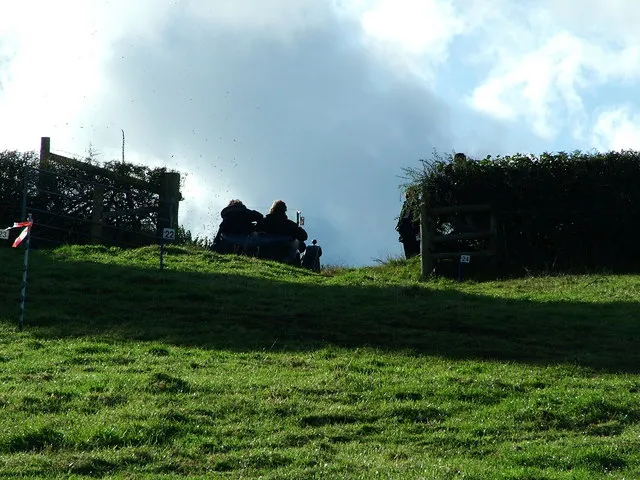
Start with the things that were quietly holding everything together in September. Post-and-rail fencing, rope, stakes, signage, the barriers at the spectator areas, gates, the state of the verge where everyone leans. A season of feet, weather and the occasional overenthusiastic reversing manoeuvre takes a toll, and the honest time to deal with it is now, while the ground is soft enough to take a post and there's no pressure to have it finished by Saturday morning.
That work is unglamorous in the extreme. It's also the difference between a marshal being able to do their job and a marshal spending the day worrying about a gap in a fence.
Paperwork is a winter sport
Anyone who thinks motorsport administration happens in the week before a meeting has never sat in on a committee in January. Permits need applying for. Risk assessments need revisiting, particularly if anything about the layout, the paddock or the spectator areas has changed. Insurance comes up for renewal. Medical and rescue cover has to be arranged and confirmed. Timing equipment gets checked, batteries get replaced, radios get charged and counted and, inevitably, one goes missing.
The dates themselves are the big one. Booking a hill means coordinating with landowners, local authorities, neighbouring events and the volunteer team's own diaries, often a year or more ahead. By the time the calendar appears on a website, a handful of people have already spent months nudging it into existence.
Ground truth
The surface gets looked at properly in the off-season too. Not resurfaced on a whim — that's not how any of this works — but inspected, walked, prodded and noted. Drainage matters more than most spectators realise: a wet patch that sits across the racing line in April has usually been a wet patch since November, and it's a great deal easier to deal with before the season starts.
Then there's the general estate work that nobody photographs. Cutting back growth, clearing leaves and debris, checking the verges, looking at the areas where spectators will stand and the routes they'll use to get there. Grass doesn't stop growing because the cars have gone home.
The kit that has to start first time
Every club has a store somewhere full of things that only matter on the day: boards, flags, tape, bollards, the contents of the recovery truck, the first-aid kit, the spare batteries, the cable ties, the good torch and the other good torch. Winter is when that store gets emptied, sorted and refilled, and when the machinery that has to be reliable gets serviced rather than merely started and hoped for.
This is also when the club's archive gets a look-in — programmes, photographs, results, the paper trail that gives a hill like this its sense of continuity. Someone has to file it, scan it and occasionally answer a letter from a family who've found a 1960s entry list in a loft.
Why the volunteers keep coming back
Ask them and you'll get a shrug and something about it needing done. Push a bit further and you'll hear the same things: the sociable mornings, the fact that the hill looks different with nobody on it, the satisfaction of walking a fence line and knowing it's right, and the pleasure of standing at the top in April watching a queue of cars that only exists because somebody spent a wet Tuesday in February sorting out a permit.
The marshals' side of this deserves a particular mention. Training days, refresher courses and the marshal register don't fill themselves, and the flag marshals you see on the bank in summer have usually given up a weekend in the depths of winter to keep their qualifications current. New recruits are always welcome, and you don't need any prior knowledge — just a willingness to stand outdoors and pay attention.
How to help when you don't own a car
Plenty of people assume the only way to be useful is to turn up with something loud and rear-drive. Not so. There are working parties for fencing and grounds, admin help for entries and programmes, archive and photography work, catering on event days, car parking, gate duty and stewarding. There's sponsorship to find, social media to keep alive in the quiet months, and the endless small tasks that make an event feel professional rather than improvised.
If you have a van, a trailer, a workshop, a printer, a laminator or a spare Saturday, someone on the committee would like to hear from you. The same goes for anyone with a trade that touches on the practical side of running a hill — joinery, groundwork, electrical, mechanical, first aid.
The season starts now
The temptation, in the grey week after the last meeting, is to put the hill out of your mind until the entry list appears. Resist it. Come and stand on the brae in the cold, look at the fence line, and remember that all of this is being kept alive by people doing small, dull jobs on wet mornings.
They'd be delighted with another pair of hands. And in April, when the first car leaves the line and the noise comes rolling back down the hill, you'll have a fair idea of exactly how much work went into that moment.