Where the Hill Lets Go: A Spectator’s Case for the Finish Line
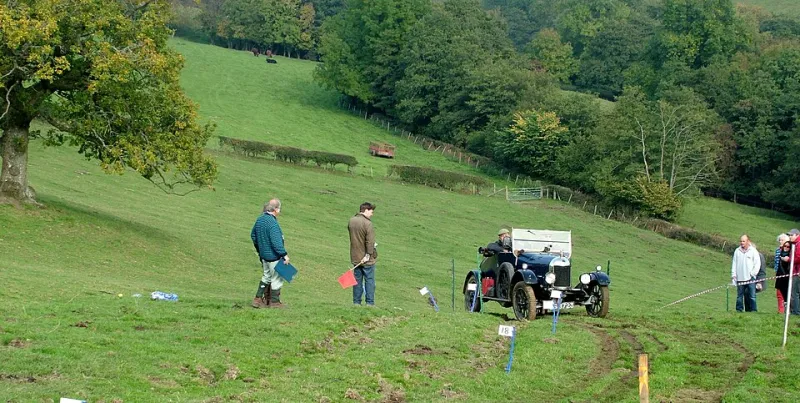
Photo: Peter Evans , CC BY-SA 2.0, via Wikimedia Commons
There is a natural gravity to the start line at Bo’ness. It is where the noise begins, where the marshals settle, where the queue of cars idles and coughs and where every run starts with that lovely, awful pause before the flag. The hairpin pulls a crowd too, for obvious reasons: brakes, lean, a bit of theatre. But if you want to understand a driver and a car rather than simply watch them set off, walk the other way. The final hundred yards of the course are where the performance stops being a launch and becomes a verdict.
The Case Against the Crowd
Standing at the start is a bit like watching a band tune up. You get anticipation, a few promising noises and the occasional flare of temper, but you do not get the song. The hairpin gives you drama, but it is often drama under duress — a car being asked to do something awkward while the driver works hard to hide the effort. The finish, by contrast, is where the effort shows. By then the climb has taken what it wants from the engine, the brakes and the driver’s nerves. What arrives at the top is the truth of the run.
At Bo’ness, the finish line has a different atmosphere from the lower reaches of the hill. It is quieter, less compressed, more conversational. You hear things you do not hear at the start: the change in engine note as a driver backs off, the chirp of a tyre under braking, the clack of a door or the rattle of something loosening its opinion. You also see the crew. That is the bit most spectators miss.
What the Last Hundred Yards Actually Show
A hillclimb run is not a single event. It is a series of decisions, and the finish is where the last few are made in public. Watch a quick car arrive and you will see a driver already planning the stop before the line appears. The braking point is not just a piece of driving; it is a statement of confidence. Some drivers brake late and hard, trusting the car and the surface. Others come in early and gentle, preserving something — brakes, tyres, themselves. Neither is automatically better, but the difference tells you who is chasing a time and who is managing a machine.
Body language matters too. A relaxed driver at the finish is usually a driver who has found a rhythm. Shoulders down, hands light, head still. A tense driver is often making corrections even after the timing beam, as if the hill might ask one more question. You can learn a lot from the way someone releases the wheel. It is the motorsport equivalent of watching someone put down a heavy bag.
Then there is the car itself. The finish line exposes the small stuff. A car that has run cleanly sounds settled; a car that has been struggling often arrives with a slightly ragged edge, a heat haze, a smell. You do not need a laptop and a data engineer to notice that. You just need to be close enough, and quiet enough, to take it in.
The Radio Voice and the Immediate Debrief
The finish line is also where the paddock’s curtain briefly lifts. Crews often gather near the top with radios, clipboards and the particular expression of people who have been waiting for a car to come back. You will hear fragments: a time, a tyre pressure, a muttered question about a temperature gauge. It is not glamorous. It is better than glamorous. It is the working end of the sport.
The immediate debrief is where the run gets translated. A driver climbs out and says three words, and the crew understands a paragraph. Sometimes it is relief. Sometimes it is frustration. Sometimes it is the calm, slightly hollow voice of someone who knows they have just done something good and does not want to jinx it. Stand nearby and you will learn more about the relationship between driver and car in thirty seconds than you will from a whole afternoon of watching launches.
How to Watch the Finish Properly
First, give yourself room. The finish area is not the place to stand in the road or lean over a rope. Bo’ness is a proper hillclimb, and proper hillclimbs need spectators to use their heads. Find a spot behind the marshals’ line, keep your footing, and keep children and dogs close. The last thing anyone wants is a good run spoiled by someone stepping into the wrong place at the wrong time.
Second, listen before you look. The engine note tells you how hard the car has been working. A clean, hard climb often ends with a note that is still strong but changing — the driver easing off, the gearbox settling, the car returning to a more normal state. A ragged note tells its own story.
Third, watch the crew as much as the car. A quick glance at the faces near the finish will tell you whether the run was expected, surprising or disappointing. Crews are not machines. They react, and their reactions are part of the sport.
Finally, stay for a few cars. The finish line rewards patience. One car is a moment; half a dozen is a pattern. You start to notice who is consistent, who is pushing, who is nursing something, and who is simply glad to be there. That is the sort of knowledge you cannot get from a timing screen alone.
The Quiet End of the Hill
The start line gives you noise. The hairpin gives you spectacle. The finish gives you the story. It is the place where the hill lets go of the car, and where the driver lets go of the run. For anyone who wants to watch Bo’ness properly — not just consume it — the last hundred yards are worth the walk. Take a flask, find a safe spot, and let the hill come to you.