The Hill Breathes Out: A Post-Meeting Walk at Bo'ness
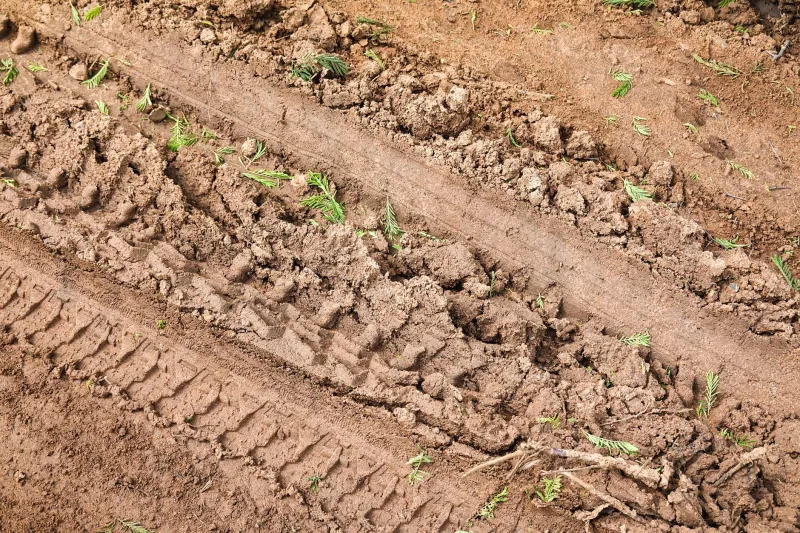
The last car goes through the finish, the tannoy crackles something half-heard, and for a few minutes the hill is still full of noise. Then the gates open, the spectators drift down towards Bo'ness, and the place begins to change. Within an hour, Kinneil feels less like a motorsport venue and more like a park with a secret. The tyre marks are still there. The atmosphere has gone somewhere else.
The last echo
Walking the course after a meeting is not the same as walking it before one. On a practice morning, every corner is a question: where to brake, where to turn, what the surface will do. Afterwards, the questions have been answered and left behind. The hill is covered in evidence — a dark line through a corner, a patch of gravel dragged onto the racing line, a faint smell of hot brakes and cut grass. You don't need a stopwatch to read it. You just need to slow down.
The first thing that strikes you is how narrow it all looks. From the bank, a car at speed seems to occupy the whole road and a bit of the sky. Standing on the tarmac, with no engine noise and no flags, the same stretch feels almost domestic. You notice the camber, the patch repairs, the way the trees lean in. You notice how much of the hill is simply a hill.
Reading the tarmac
Tyre marks are the obvious relics. Some are fat black smears laid down by cars that were trying very hard. Others are thin, neat lines that suggest a driver who knew exactly where they wanted to be. There are scuffs near the edges where someone ran wide, and little piles of rubber marbles that look like dropped liquorice. None of it tells you the whole story, but it tells you enough. A hillclimb is a conversation between driver, machine and surface, and the surface keeps the minutes.
Then there are the spectator traces. A flattened patch of grass on a bank. A folded programme under a fence. A thermos lid that someone will miss. These are not glamorous finds, but they are part of the same record. Bo'ness has always been a place where people stand close to the action, often in coats, often with a flask, usually with an opinion about the line through the next corner. The hill remembers them in the same way it remembers the cars: by the marks they leave.
The marshals' last lap
The marshals are the last people most spectators see and the first ones most spectators forget. After the final run, they don't simply walk away. There are flags to fold, cones to collect, radios to sign back in, and a hundred small checks that make the next meeting possible. A marshal walking down the hill with a bag of flag poles is not doing a lap of honour, but it looks like one. It is slow, deliberate and quietly essential.
Packing away is its own ritual. The paddock empties from the front backwards: first the big awning, then the toolboxes, then the cars on trailers. What's left is a patchwork of grass, oil spots and wheel tracks. The burger van closes. The portable loos get their final queue. Someone coils a hose. Someone else says they'll see you next year, and means it.
What the hill keeps
The silence is not an absence. It is part of the heritage. A historic hillclimb course is not just a stretch of tarmac with a start line and a finish; it is a place that has been used, loved and worn by decades of weekends. The stone walls, the trees, the estate roads and the views across the Forth are all part of the same picture. When the engines go, you can hear the place itself: birds, wind, the town below, a gate banging somewhere.
By November, the 2026 season is already a set of photographs and a list of winter jobs. That quiet is also where the next generation comes in. The Revival doesn't happen only on the day. It happens in the winter, in workshops and on forums, in conversations between people who volunteered as marshals and ended up entering a car. A post-event walk is a reminder that the hill is not a museum exhibit. It is a working landscape with downtime. Someone will be back to scrub tyres and check times. Someone will be back to stand on that bank with a flask. The hill will be ready.
A walk worth taking
If you go up after a meeting, go respectfully. Check access, keep to paths where they exist, and take your litter home. The hill is at its most honest when it's empty, but it's also at its most vulnerable. Don't climb over barriers that are still up. Don't assume a quiet paddock means nobody is working. The people packing away have earned a bit of space.
Walk to the start line, then turn around and look down. You'll see the course as the drivers see it, only without the noise. You'll see the banks where spectators stood, the gaps in the trees, the long run to the finish. You'll see the marks of a good day. And if you stand there long enough, you'll understand why the silence matters. It is not the end of the meeting. It is the bit that makes you want the next one.