Two Watches and a Ledger: The Quiet Arithmetic Behind Every Bo'ness Time
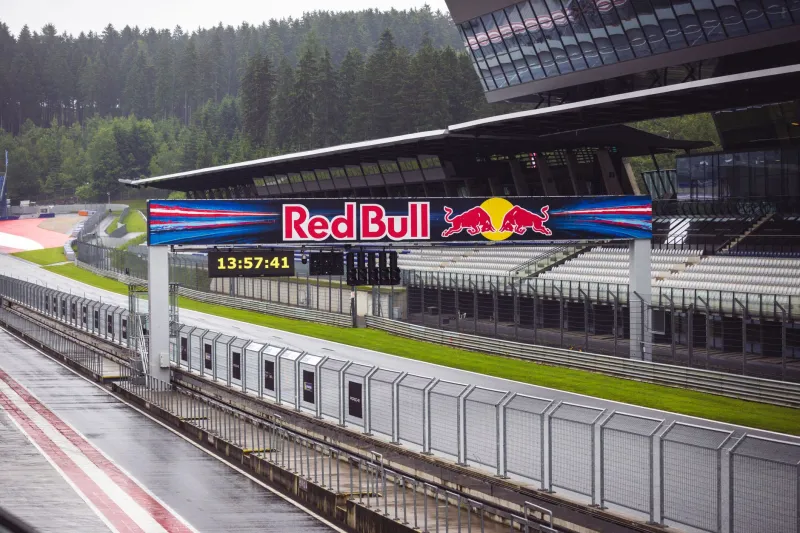
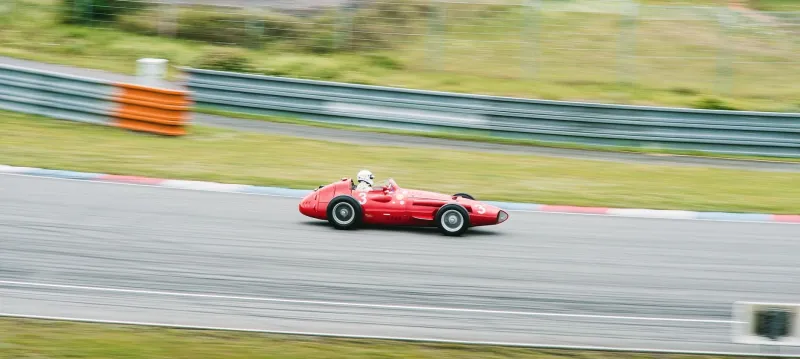
At Bo'ness the hill gives you plenty to look at: the rise past the trees, the bank of spectators, the way a pre-war car leans into the top bend like it's leaning on a gate. What you don't see — unless you know where to look — is the small cabin near the finish, where two people, a laptop and a clipboard decide what the day actually means. Because in hillclimbing the run isn't over when the car crosses the line. It's over when the number is written down.
The Beam Does the Counting
Modern hillclimb timing is mostly a light beam. A transmitter sits on one side of the track, a receiver or reflector on the other, and between them runs an invisible line across the finish. Break it and the timer stops, usually to a hundredth of a second. The start works the same way in reverse, so the clock knows precisely when the run began rather than when somebody thought it did.
In theory, then, nobody needs a stopwatch at all. In practice, that is exactly why everybody has one.
Two Thumbs and a Protocol
Every finisher is also hand-timed. The backup watches start on the start signal — the light, the hooter, whatever the meeting is using — and stop when the car appears at the line. Two timekeepers, two watches, two sets of eyes, and a shared understanding that eyes can be early and thumbs can be late.
If the two watches agree within the tolerance the club has settled on — often a tenth or two — the agreed figure goes down and everyone gets on with it. If they don't, the chief timekeeper asks the awkward question: which one is right, and what does the beam say? Nine times out of ten the beam is the referee. The tenth time is the interesting one.
When the Beam Misses
Beams miss runs for reasons that never appear in the results. A very low car can slip under the line. A very high one can pass over it. A cone knocked into the beam's path, a bracket loosened by wind off the Forth, condensation on the lens, a spectator leaning out of the wrong place at the wrong moment — any of these can leave the timer with nothing to report. A car that spins across the line sideways can even break the beam twice, which is its own small arithmetic problem.
When that happens the run doesn't stop being a run. The chief declares no beam time, the manual backup becomes the official figure, and the ledger gets a note beside the run number explaining why. Nobody enjoys writing the code for a missed beam next to a driver's time, but nobody argues with it either, because the note is there for everyone to see.
The Ledger Doesn't Lie (Much)
Under the laptop there's a clipboard, and under the clipboard there's the ledger. Run number, car number, class, time, initials, and a column for remarks that fills up as the day goes on. It looks old-fashioned because it is, and it has outlasted better-looking systems at club meetings all over the country.
Why does paper still matter? Because laptops flatten, printers jam, and signals drop out at the top of a hill. Because a historic car may not carry the kit the modern timing gear expects. And because a query raised at signing-off, an hour after the last run, is settled fastest by turning a page rather than scrolling a screen. The ledger is the day in its rawest form — and when the results are published and somebody's class win hangs on a tenth, it is the only version everyone accepts.
Radios, Rain and the Long Wait
From the cabin you can see the finish and very little else. That's the point, and it's also the problem. The timekeepers can't see the start, and the start can't see them, so the day runs on radio calls: car away, car on the hill, car at the line, course clear. When a car stops somewhere between the posts, the next start is held until the marshal who can actually see it says so. A held start means a batch of runs arriving late, and a batch of runs arriving late means the ledger has to work harder.
Add rain, and the beam becomes a negotiation. Add a cold wind and the thumbs become the weak link. The people in that cabin are the only ones on the hill who have to be right every single time, and the only ones nobody applauds when they are.
The Reward Is a Clean Sheet
What the timekeepers get, in place of a cheer, is a page with no questions on it. A full card of runs, every time accounted for, every query answered before the results go up. The satisfaction is the same one a good mechanic gets from a car that starts first turn — quiet, internal, and completely invisible to everyone else.
The one day it goes wrong is the day everybody remembers. That's the pressure of the post. So the next time you're at Bo'ness and a car crosses the line to a ripple of applause, spare a thought for the small cabin up the track, where two people are already writing the number down before they look up. The hill decides the drama. They decide what it's worth.