Kept, Not Caged: The Case for Usable Originality Up the Brae

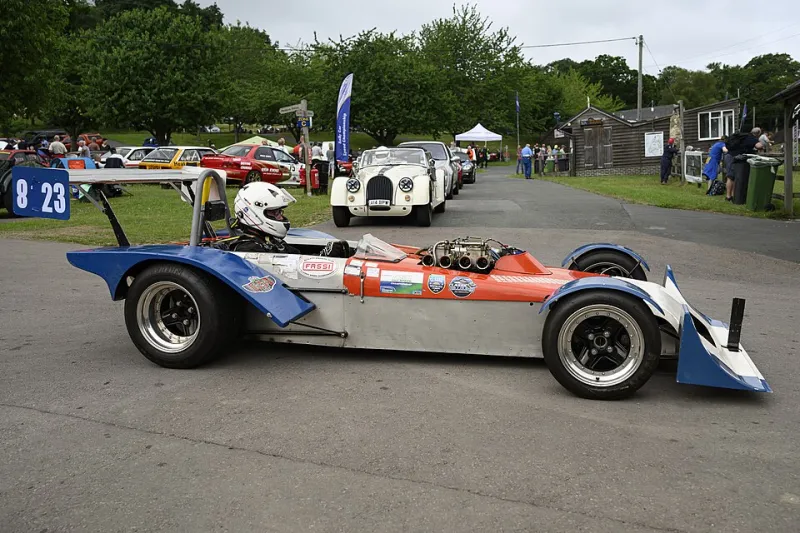
Photo: Rundvald, CC BY-SA 4.0, via Wikimedia Commons
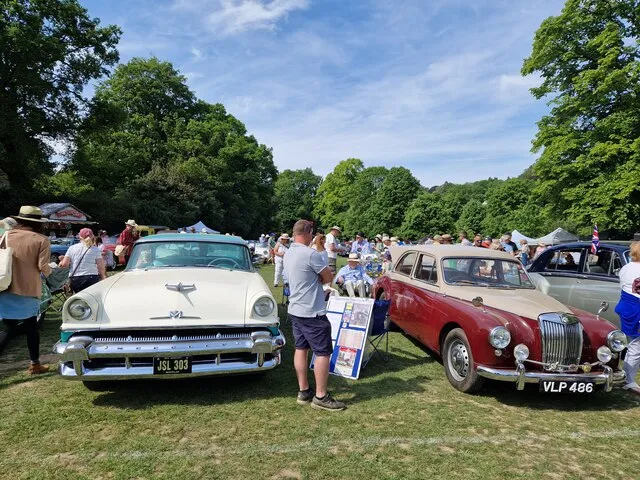
There's a particular kind of Bo'ness car that turns heads without trying: slightly stone-chipped on the nose, a period sticker on the screen, a carburettor that smells faintly of petrol when it's cold, and a driver who has clearly owned it for fifteen years. It's not a concours car. It's not a silhouette racer either. It sits in a middle ground that the historic movement argues about constantly, and which, on this hill, tends to win.
Perfect is a car that doesn't move
The case for absolute originality is easy to make and impossible to argue with in the abstract. If a car competed at Bo'ness in the 1930s or ran at the Revival in the 2000s, its details are evidence. The correct Smiths gauge, the right shade of paint, the wheels it actually ran on, the club badge from a long-defunct Scottish motor club — these things can't be re-manufactured out of context. Remove them and you have a car that looks like the original rather than one that is.
That argument holds hardest for genuinely significant cars with documented competition history. When a car has a paper trail, an owner is a custodian rather than a customer.
But most Bo'ness cars aren't museum pieces. They're club cars with a competition life measured in weekends, and the museum treatment has a cost: the trailer, the heated storage, the reluctance to risk a stone chip on a wet June morning. A car preserved to the point of immobility isn't being preserved at all. It's being warehoused.
Where Bo'ness class culture sits
The hill's class structure quietly does a lot of this thinking for owners. Road-going and modified categories exist precisely because a usable car and a purpose-built one aren't the same animal, and there's room for both across a meeting. The result is a paddock where a beautifully standard roadster can sit next to something with a later engine, wider wheels and a roll bar, and neither looks out of place.
That tolerance is worth protecting. It's the reason a newcomer with a half-sorted car can enter at all.
Upgrades that don't argue
The safest modifications are the invisible and the reversible. Electronic ignition hidden inside a period distributor body. A modern fuel pump feeding the original carburettor. Silicone hoses, a uprated radiator core, a gear reduction starter, hardened valve seats so the car can run on unleaded without a bottle of additive in the boot. None of these change how the car looks, and every one of them changes how often it gets used.
Safety items tend to be accepted without much debate, and rightly so: harnesses, a properly mounted extinguisher, a roll bar or hoop where the regulations call for it, a seat that holds you. Historic motorsport has spent decades learning that injuries are not a heritage feature.
Where it starts to bite
Bodywork, chassis and identity are different territory. Flared arches, a changed roofline, a replacement block from a different era — these alter the car's story rather than its reliability, and they're difficult to undo. They also affect what an eligibility scrutineer will accept and what a future buyer will pay.
The value question is rarely about a single modification. It's about coherence. A car with a well-documented, sensibly executed set of period-appropriate upgrades tends to hold value well. A car with a modern engine, an untouched original interior and a respray in a colour it never wore is a puzzle, and puzzles sell at a discount.
The box of old parts test
There's a simple discipline that separates sensible from regrettable: keep everything you take off, label it, photograph it going back on, and ask yourself whether the change could be reversed in a weekend.
If the answer is yes, you're probably fine. If it needs a welder and a decision you can't undo, it deserves a longer think and, ideally, a conversation with someone who has owned the same model for a decade.
Usable originality isn't a compromise between two purists. It's the recognition that a historic car's value includes the fact that it still turns up, still climbs the brae, and still makes a noise on a Sunday morning that a photograph can't reproduce. Keep it that way and everybody wins — including the next owner.