Five From Home: Scottish Metal That Belongs on the Brae
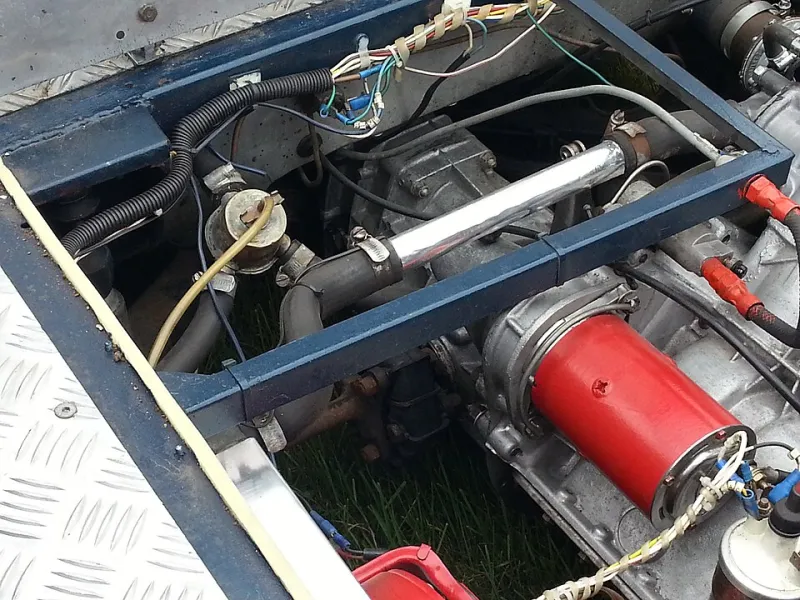
Photo: Andy Dingley, CC BY-SA 4.0, via Wikimedia Commons
Every entry list at the brae has a familiar rhythm. Escorts, Imps in numbers, the odd Sunbeam, a serious modern single-seater, a beautifully turned-out pre-war car with a leather-strapped bonnet. What you hardly ever see is the rest of Scotland's back catalogue — the cars designed, built or assembled within an hour or two of the hill and now almost entirely absent from it.
That's a shame, and it's also an opportunity. So here are five machines with genuine Scottish pedigree, in rough order of how realistic they are to campaign today. No false optimism: each one comes with a note on parts and a list of things to check before money changes hands.
1. Hillman Imp — Linwood, 1963 onwards
The obvious one, and the one that most deserves the attention. Rear-engined, all-alloy, water-cooled and built in a purpose-built plant at Linwood, the Imp was designed to take on the Mini and spent most of its life being underestimated. It still is.
Why it works on the hill: low weight, a revvy 875cc engine over the driven wheels, and a short wheelbase that suits a tight, technical climb. There's a well-established club scene, a healthy supply of tuning parts, and enough competition history to keep the modification debate lively.
Parts reality: good. Panels, suspension bits, brake components and engine internals are all obtainable through the owners' network. Cooling and head gasket work are well documented — which is another way of saying they are well documented for a reason.
Checks: sills, floor pans and the area around the rear suspension mounts. The transaxle and clutch arrangement is unusual and expensive to get wrong. Look hard at anything that has been off the road for a decade, because the Imp's reputation for rot is thoroughly earned.
2. Hillman Avenger — Linwood, 1970 onwards
Assembled alongside the Imp for much of the Seventies, the Avenger is the forgotten saloon of its generation: conventional where the Imp was clever, and all the better for it. Solid shell, simple running gear, a decent competition record in period, and still relatively cheap.
Why it works on the hill: a traditional front-engine, rear-drive layout that responds well to sensible suspension work, with plenty of room for a cage and the sort of honest, predictable handling that suits a short climb.
Parts reality: fair to good. Mechanicals are simple and shared across the range. Body panels and trim are the weak point — the specialists exist, but stock is thinner than it is for the obvious Ford alternatives.
Checks: front wings, sills, valances and the base of the windscreen. Verify the engine number against the model, since plenty of cars have been rebuilt around a replacement block, and be suspicious of anything sold as a "Tiger" without paperwork.
3. Argyll Turbo GT — Lochgilphead, 1980s
Scotland's most unlikely sports car. A fibreglass-bodied coupé built in Argyll in small numbers, using Ford-sourced mechanicals to keep it viable — a thoroughly sensible idea that arrived at the wrong moment. Only a handful are believed to have been completed, and you're more likely to see one in a museum than in a paddock.
Why it matters: it's the proof that low-volume Scottish car manufacturing didn't stop in the Seventies. On paper, a light glassfibre body over familiar running gear is exactly the sort of thing that should be quick up a hill.
Parts reality: the opposite of the Imp. Bespoke glassfibre panels are effectively unobtainable, so originality is everything and accident damage is potentially terminal. Mechanical bits are easier, but only because they were borrowed in the first place.
Checks: everything. Body condition, chassis structure, the state of the glass, and any documentation tying the car to its build. These are collector objects first and competition cars a distant second — and honestly, that's fine.
4. Galloway — Tongland, Kirkcudbrightshire, 1920s
Built near Kirkcudbright after the First World War, the Galloway was a proper light car with a proper light car's virtues: modest capacity, light weight and a design brief heavily influenced by Dorothée Pullinger, one of the most interesting engineers this country has produced.
Why it works on the hill: pre-war light cars were built for exactly this sort of thing — narrow, light, and happy to be revved. And the sight of one climbing the brae would be worth the entry fee on its own.
Parts reality: specialist and slow. Nothing is on a shelf. You will be commissioning parts, trawling autojumbles and leaning hard on the vintage movement's collective memory.
Checks: verify the car's identity and history properly before anything else — with cars of this age, paperwork is a large part of the value. Then check the wooden body framing, the condition of the wheels and the state of the magneto and ignition system. Eligibility for period-correct events needs confirming early, not after you've bought it.
5. Arrol-Johnston — Glasgow and Paisley, 1898 to 1931
Scotland's great early marque, and one of the oldest names in British motoring. Arrol-Johnstons were substantial, well-made cars, and the surviving examples are almost all in museums or long-term collections. Getting one onto the brae would be a genuine event.
Why it matters: the hill's own history runs back to the 1930s, and a car from a Scottish maker of that era ties the two together in a way no modern entry can.
Parts reality: museum-level. Assume that every component is either original and precious or has to be made from scratch by someone with a lathe and patience.
Checks: provenance, provenance, provenance. Then a specialist inspection of the engine, the transmission and the chassis. Nobody should buy a car like this without independent advice and a very honest conversation about what they intend to do with it.
Before you commit
Whichever of these you chase, the practical questions are the same. Does the club you intend to run with have a class the car fits? Can you get a trailer and a tow car that will actually stop? Have you budgeted for tyres, entry fees, fuel, and the annual round of jobs that a competition car always needs? And do you have somewhere dry to keep it, because Scottish weather is not sentimental about glassfibre or 1920s timber.
The hill doesn't need another Escort. It would be rather good to see a bit more of what Scotland built for itself.