The Bits That Get You Home: Anatomy of a Bo’ness Paddock Spares Box
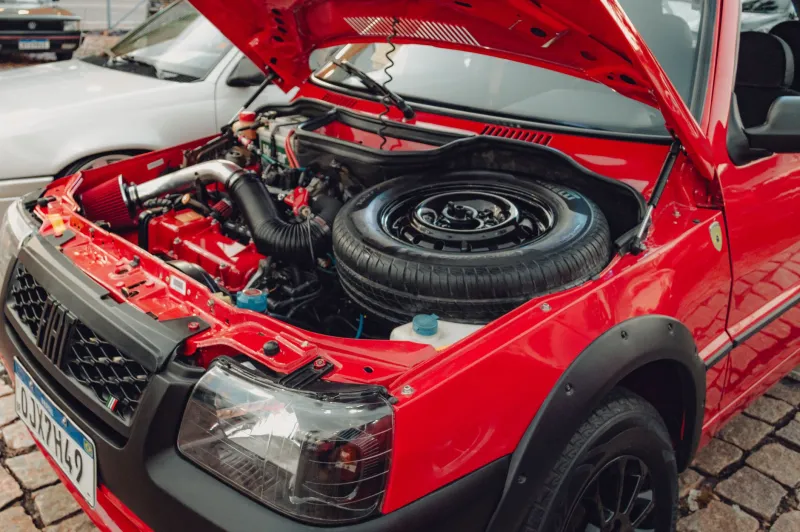
At Bo’ness, the boot lid is often the first workshop you see. Before the kettle has boiled, before the scrutineer has had a proper look at the catch tanks, there’s usually a tailgate up and a plastic tub out. The contents are rarely glamorous. Cable ties, a coil, a length of fuel hose, a rag that has seen better decades. But that modest pile is part of the hill’s real infrastructure.
Ask anyone who has campaigned a classic up the Bo’ness slope and they’ll tell you the same thing: the spares box isn’t pessimism. It’s manners. It’s also a recognition that the hill is short, steep and unforgiving, and that a five-quid part can be the difference between a run, a retirement and a very long tow home.
The boot lid is the first toolbox
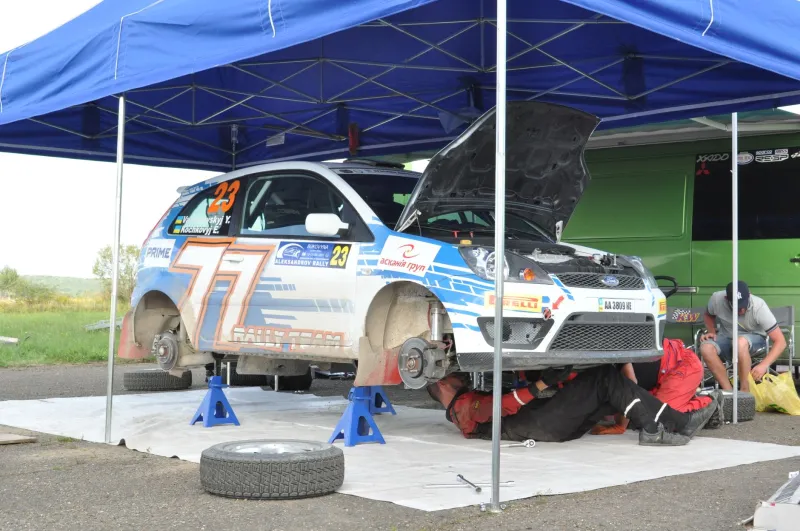
Paddock life at Bo’ness has a particular rhythm. There’s the early flurry of unloading, the slow business of warming an engine that would rather stay in bed, and the quiet moments when competitors drift between cars. That’s when you notice the kit. Not the shiny stuff on display, but the working stuff: old ice-cream tubs with lids, zip bags labelled in marker pen, a battered tin that once held shortbread and now holds crimp terminals.
“You learn what you need by forgetting it once,” one regular with a long-nosed special told me, while extracting a spare throttle cable from a box that seemed to contain half a motor factor’s stock. “After that, you pack it every time. Even if you never use it. Especially if you never use it.”
That’s the spirit. The spares box is a memory aid as much as an emergency kit. It records every failure the owner has seen, heard about or been rescued from.
What actually fails on the hill
Bo’ness is not a circuit. There’s no long straight to cool things down, no gentle lap to settle the nerves. It’s a climb, a set of demands and a finish line that arrives sooner than expected. Heat, vibration and gradient do the rest.
The usual suspects are familiar to anyone who has run an older car in competition. Ignition components top many lists: points, condensers, rotor arms, distributor caps, spark plugs and the odd coil. Fuel delivery is another favourite — a failing pump, a blocked filter, a perished hose or a tired clip. Cooling system parts get a workout too: hoses, fan belts, hose clips and a bottle of coolant. Electrical gremlins are rarely far away, which is why fuses, wire, crimp connectors, insulation tape and a generous bag of cable ties appear in almost every box.
Then there are the mechanical bits that can end a day quietly: throttle cables, clutch cables, split pins, nuts and bolts, a spare throttle return spring. And the consumables that nobody boasts about but everybody uses: brake cleaner, WD40, oil, brake fluid, rags, hand cleaner and a roll of blue paper towel.
The core kit nobody argues about
If you’re building a first spares box for hillclimbing, start with the boring things. They’re the ones that get used.
- Ignition: spare plugs, points and condenser if applicable, rotor arm, distributor cap, coil, small file or contact cleaner.
- Fuel: fuel hose, hose clips, inline filter, a suitable pump or rebuild kit if the car has a known weakness.
- Cooling: top and bottom hoses, fan belt, hose clips, coolant, distilled water.
- Electrical: fuses, wire, crimp terminals, crimping tool, insulation tape, cable ties, test lamp, multimeter.
- Mechanical: throttle cable, clutch cable, return springs, split pins, assorted nuts and bolts, lockwire.
- Fluids and goo: engine oil, brake fluid, coolant, aerosol cleaner, grease, thread lock, gasket compound.
- Tools: spanners, sockets, screwdrivers, pliers, cutters, hammer, tyre pressure gauge, torch, gloves.
It sounds like a lot. In practice, most of it fits into a couple of stout boxes and a tool roll. The trick is not quantity. It’s knowing where the thing is when your hands are shaking and the clerk of the course is looking at his watch.
The obscure part and the favour economy
Every paddock has one. The obscure part. The water pump for an engine that stopped being common before most of us had a driving licence. The correct distributor cap for a French oddity. The one-size-only hose that somehow fits a Scottish special built in a shed in 1968.
Nobody admits to carrying these things until the moment they matter. Then a boot opens, a box is produced and a stranger’s day is saved. This is the favour economy of Bo’ness, and it runs on trust. You borrow a coil; you return a coil. You take the last two cable ties from someone’s tub; you replace them next meeting. You don’t ask to borrow a torque wrench and then disappear with it.
The best spares kits are generous. They’re packed with the assumption that you might not be the one who needs them. That’s why experienced competitors carry duplicate small items — spare fuses, spare clips, spare spark plugs — not because they expect to use four, but because someone else might need one.
Pack it so you can find it
A spares box is only useful if it’s searchable. Clear plastic boxes beat dark toolbags. Labels beat memory. A written inventory taped inside the lid is not overkill; it’s a kindness to yourself at 7.30am when the hill is damp and the engine is cranky.
Keep the everyday stuff on top: tape, ties, fuses, rags, the tools you reach for first. Put the ‘hope I never need this’ parts underneath, but know exactly where they are. And keep a separate small bag for the drive home — bulbs, a spare fan belt, tape, a torch, a basic socket set. The run is only half the story. The return leg matters too.
The quiet point of it all
The Bo’ness paddock is full of people who enjoy the doing. They like the preparation, the problem-solving, the chat. A good spares box is part of that. It says you’ve thought about the hill, about the car, and about the person in the next bay who might need a hand.
So yes, pack the cable ties. Pack the contact breaker. Pack the obscure part you’ve never used. Just don’t be surprised when the day it finally comes out of the box, it isn’t for your car at all. That’s not a wasted spares kit. That’s a Bo’ness spares kit working exactly as intended.