Urns, Aprons and the Longest Queue on the Hill
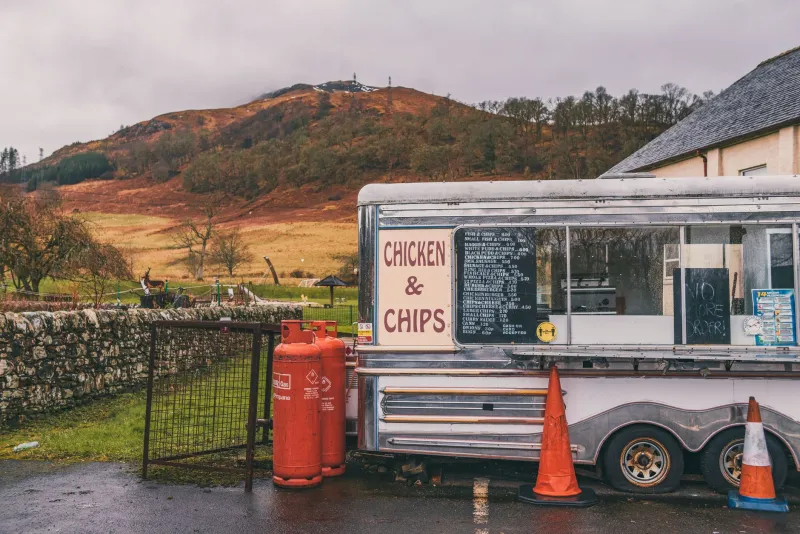
The hillclimb starts long before the first engine barks into life. It starts with a van door sliding open in the half-light, a gas bottle being lugged across wet grass and the smell of bacon finding its way up the slope before the marshals have finished their briefing. At Bo'ness, the food operation is not a sideshow. It is a moving part of the meeting, as surely as the timing beam or the recovery truck.
Before the Hill Wakes
By five fifteen, the first catering van is at the gate. The driver knows the routine: sign in, find the spot, level the van, connect the gas, fill the water tank, start the generator. The local butcher's delivery follows shortly after — square sausage, bacon, black pudding, a box of steaks for the lunchtime rolls. The rolls themselves come from a bakery the other side of Falkirk, and they arrive in paper sacks that steam gently when you open them.
In the paddock, a volunteer has already filled the first kettle. It is an ordinary thing, a big stainless urn on a trestle table, but it becomes the centre of a small early-morning society. Marshals drifting in from the car park. A scrutineer with a clipboard under one arm. A driver who has been up since four and looks like he has slept in his overalls. The first queue of the day is rarely more than five people, but it is serious about its tea.
The First Urn
The menu is on a chalkboard, and it does not pretend to be anything it is not. Bacon rolls. Square sausage rolls. Tattie scones. Black pudding. A vegetarian haggis option that has quietly built a following. Tea, coffee, juice, and a tray of Irn-Bru that seems to empty by mid-morning. Prices are reasonable and the card machine works when the signal allows, which is not always.
By half six, the urn is on its second fill and the griddle is warming. The first proper queue forms around quarter to seven. It is not the longest queue of the day — that comes later — but it is the most purposeful. These are people who need fed before practice, and they know exactly what they want.
Bacon at Twenty Past Seven
The griddle finds its rhythm. Bacon goes down, sausage goes down, rolls are split and buttered. The smell drifts up the hill and does a better job of waking the paddock than any loudspeaker announcement. Drivers who were still half asleep suddenly remember they are hungry. Mechanics who said they would wait until later drift over with a casual air that fools nobody.
This is the hour when the catering van becomes an information exchange. The queue is where you hear that someone has changed tyres overnight, that a trailer arrived late, that a certain car has a misfire it did not have yesterday. It is where you learn which marshal post is short and which spectator has found the best spot on the bank. The food is simple, but the conversation is not.
The Lunchtime Surge
By half twelve, practice is over and the hill is hungry. The queue now stretches past the burger van and curls towards the paddock gate. It is the longest line of the day, and it moves with the steady patience of people who have nowhere else to be for twenty minutes. The griddle is working flat out. The urn is refilled. Someone is sent to the shop for more milk.
The lunchtime menu widens a little. Soup if the weather is cold. Stovies if the forecast has been grim all week. The local suppliers are visible in the details: the butcher's name on the sausage boxes, the dairy's label on the milk, the bakery's sacks stacked by the bin. Nothing is fancy. Everything is warm.
The shared tables are the other half of the operation. A stranger sits down next to a driver and compares times. A marshal explains the flag signals to a spectator's child. A mechanic eats standing up because someone has taken his seat. For twenty minutes, the paddock becomes a canteen, and the hill's usual hierarchies soften.
The Quiet Hour
By half two, the surge has passed. The queue shortens, then disappears. The caterers eat their own lunch standing behind the counter, which is the only way they are going to get it. The urn is topped up again. The griddle is scraped down. A tray of rolls is counted and found wanting, and someone makes a call to see if more can be brought up from the village.
This is the hour when the food operation shows its seams. The bin bags are changed. The water container is checked. The card machine is rebooted. The tea is still hot, but the urgency has gone out of it. The hill is quiet, and the queue is just a memory of people standing in a line.
The Last Pot
At quarter to five, the final runs are underway and the queue returns in a smaller, more relaxed form. This is the last-pot-of-tea crowd: people who have watched the day through and want something warm before the drive home. The griddle is still on, but it is being used sparingly. The chalkboard has been wiped down and rewritten with fewer options.
When the last car comes down the hill, the catering van is already thinking about tomorrow. The urn is drained and washed. The griddle is scraped and wiped. The leftover rolls are bagged up and given to whoever is still standing. The van door slides shut around six, and the hill goes properly quiet.
Why the Queue Matters
You could run a hillclimb without a bacon roll. People would still get up early, still walk the course, still cheer the quick cars and wince at the red flags. But the meeting would be thinner. The queue is a leveler. It is where the spectator and the driver stand next to each other and wait for the same thing. It is where the volunteer gets a hot cup of tea and a bit of thanks. It is where the local butcher, the baker and the dairy have a small stake in the day.
The catering operation at Bo'ness is not glamorous. It is gas bottles and washing-up and a chalkboard that gets smudged. But it is as much a part of the hill's culture as the noise and the times. The cars bring the crowd. The queue keeps them there.