Before the Sticker Goes On: A Newcomer’s Guide to Bo’ness Scrutineering
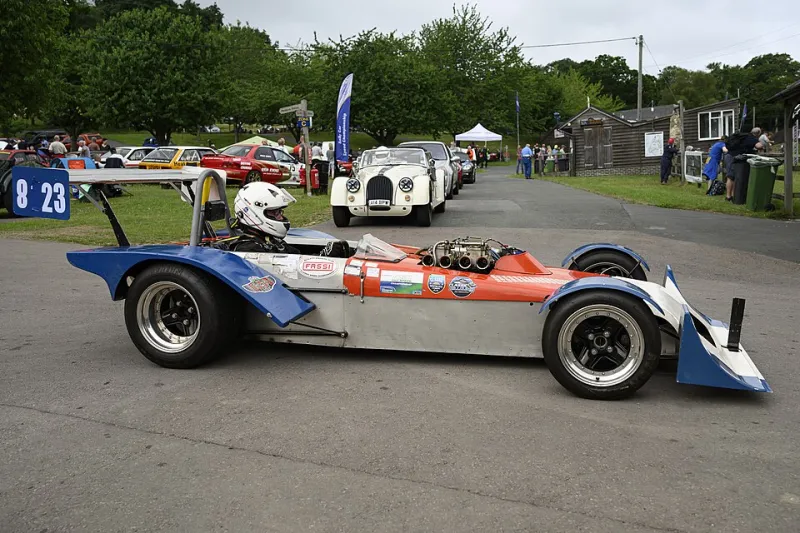
Photo: John Chapman (Pyrope), CC BY-SA 3.0, via Wikimedia Commons
Scrutineering has a reputation problem. To a first-timer it can sound like a queue, a clipboard and a list of things you got wrong. In the Bo’ness paddock, it is better understood as the last honest conversation before the hill. The car is looked over, the paperwork is matched to the machine, and everyone gets a chance to spot the sort of small fault that becomes a large problem at speed. As the 2026 Revival approaches, here is a practical ten-point walk through what scrutineers tend to notice — and what catches out newcomers.
1. The entry file
Start with the boring bits. Entry confirmation, driver details, club or licence requirements, and any vehicle paperwork required by the event regulations should be complete and consistent. A car with a changed engine, a different registration or a hastily altered entry form invites questions before anyone has looked at a wheel nut. Keep documents in a plastic wallet, not loose in the boot beside an oily rag.
2. Chassis and structure
Scrutineers are not looking for concours perfection, but they are looking for strength. Corrosion around suspension mounts, seat mounts, jacking points and sills is a common concern on older classics. So is a chassis that has been repaired with hope rather than metal. If the car has a rollover structure, check its mountings and condition. A tidy engine bay can hide a tired floor; a clean floor is worth more than a shiny rocker cover.
3. Brakes and fluid
Brakes get worked hard on a hill, and the paddock is full of stories about pedal feel that changed between practice and a timed run. Check fluid level and condition, look for leaks at calipers and pipes, and make sure pads and discs have meat on them. A spongy pedal is not a characteristic of a classic; it is a warning. Fresh fluid and a proper bleed are cheap insurance compared with a missed braking point.
4. Steering, suspension and bearings
Grab the wheels at twelve and six, then three and nine, and feel for play. Worn track rod ends, tired top mounts and loose wheel bearings are the kind of faults that feel minor in a garage and serious on a hill. Check springs, dampers and bushes for cracks or leaks. If something was replaced over the winter, re-check it now — new parts can settle, and nuts can come back to visit.
5. Wheels, tyres and wheel nuts
This is where last-minute fixes are most visible. Look for damaged rims, missing spinners, incorrect wheel nuts and tyres that are cracked, under-inflated or simply too old for the job. Period-looking tyres still need to be safe. Check torque and carry the correct spanner. One of the classic paddock sights is a owner hunting for a wheel nut that was last seen on a bench at home; do not be that owner.
6. Fuel, oil and battery security
Leaks are a firm no. Check fuel lines, unions, carburettor seals and oil breathers. Make sure the battery is properly clamped — a bungee cord is not a clamp — and that terminals are covered where required. Catch tanks and breather arrangements should be in good order. A smell of petrol in the paddock should send you looking for a cause, not a cloth.
7. Seats, belts and rollover protection
Harnesses and seat mounts take load, so condition and dates matter. Frayed webbing, missing bolts or a seat that moves by hand are obvious concerns. Where rollover protection is required, check it is fitted as the regulations demand and is not cracked or badly mounted. If you are borrowing a harness from a friend, check the date before you thank them.
8. Electrical, ignition and cut-off
Loose wiring, exposed terminals and a battery master switch that does not work are the sort of things that can stop a run before it starts. Check that the ignition and cut-off arrangements are clear and operable. Tidy wiring is easier to inspect and less likely to fail over a bumpy hill. Cable ties are useful; a loom held together by tape and optimism is not.
9. Fire safety and recovery points
Extinguishers should be in date, mounted securely and within reach. Check that towing points or recovery markings are present and obvious where the regulations require them. Marshals and recovery crews should not have to guess where to attach a strap. A small label and a clean tow eye can save minutes — and sometimes a lot more.
10. Period correctness and the final walk-round
Bo’ness celebrates historic machinery, so period spirit matters, but so does presentation. Check that the car looks like the car on its paperwork, that competition numbers are clear, and that nothing is loose in the cockpit or boot. Then do one last walk-round: look for leaks, listen for strange noises, and make sure the bonnet and boot are secure. If a scrutineer asks a question, answer it plainly. The clipboard is not the enemy; it is the last set of eyes before the start line.