Grey Skies, Sharp Edges: Driving Bo’ness When the Weather Turns
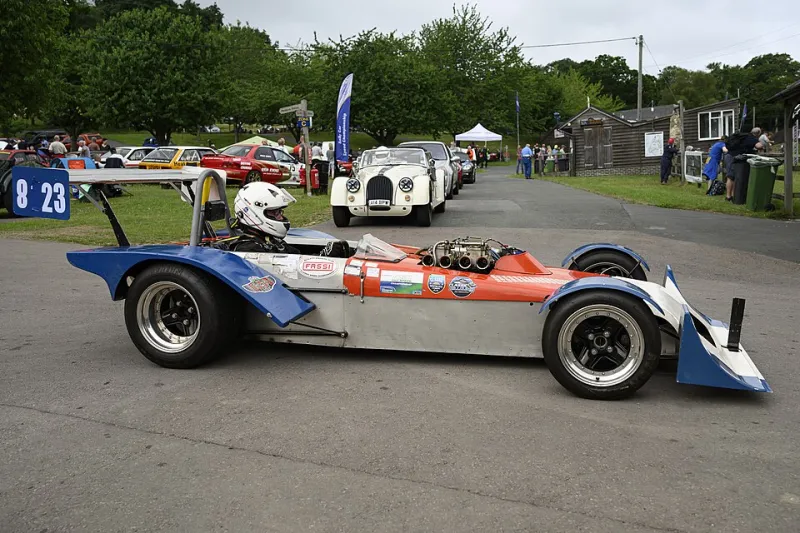
Photo: ChristopherJClarke, CC BY-SA 4.0, via Wikimedia Commons
Bo’ness in the dry is a postcard: the Forth glinting below, classics queueing in the paddock, and a hill that looks almost friendly. Bo’ness in the wet is something else. The same hill becomes a lesson in patience, and the same car — especially a rear-drive classic on modest tyres — starts talking to you in a different language. For 2026, the Revival’s course will still reward horsepower, but when the clouds roll in off the estuary it rewards judgement more.
Read the hill before you read the forecast
Scottish weather rarely arrives on schedule. A forecast that promises a dry morning can meet a damp sea haar halfway up the hill, and the top of the course can be greasy while the paddock is merely chilly. Treat the forecast as a hint, not a guarantee. Walk or spectate at a few points if you can; look for moss on the inside of corners, leaf litter under trees, and the darker patches where water sits. At Bo’ness the camber and the trees can make one section dry and another slick, so a single tyre choice for the whole run is always a compromise.
Tyres: the rear axle writes the story
Classic hillclimbing often means period-sized rubber, and that is part of the charm. It is also the first thing to think about when the surface is cool and damp. Tread depth matters more than glossy sidewalls. Pressures are worth checking hot and cold; a few psi can change how a light rear end behaves under load. On a wet hill, the rear tyres are doing two jobs at once: putting down whatever power you dare and keeping the car pointing where you intended. If they are old, hard or under-inflated, the throttle becomes a switch you do not want to press too hard.
Throttle discipline beats bravery
The temptation in the wet is either to tiptoe or to prove a point. Neither works. The quickest damp runs usually look boring from the bank: early upshifts, gentle application, and a driver who listens for the moment when grip starts to go. Rev-limits are there to save the engine, not to be bounced off like a rally car. In a classic, torque can arrive before the tyres are ready; feeding it in progressively is quicker than a heroic stab that lights up the rear and scrubs speed. If the car has a limited-slip diff, remember it can make the back feel more decisive — and more eager to step out.
Braking points move, lines change
Dry braking markers are a starting point, not a contract. In the wet, brake earlier and lighter, and aim to be off the pedal before turn-in so the front tyres have something left for steering. Standing water and mud dragged onto the surface can make a late brake feel like a lottery. The racing line may not be the grippiest line either: on a damp hill, the outside of a corner can be cleaner, and the inside can be polished or leafy. Smoothness counts for more than a perfect apex.
Spectator strategy for a damp day
If you are watching rather than driving, wet weather changes the day too. Waterproof boots are more useful than an umbrella, and a change of socks is not a joke. The best viewing is often at a slower corner where you can see drivers feel for grip, rather than at the fastest point where the car is past before you have wiped your glasses. Keep behind the ropes, listen to the marshals, and give recovery crews room. A damp Bo’ness is still a great day out; it just asks you to dress for the hill rather than the car park.
Why the wet run is worth it
A dry hillclimb shows you who has power. A wet one shows you who has feel. For owners, it is a free lesson in setup and self-control; for spectators, it is the chance to see classics being driven with care rather than merely displayed. The Scottish weather may rewrite the script, but it rarely ruins the plot. Bring a coat, check the rears, respect the rev limit, and let the hill tell you what it wants.