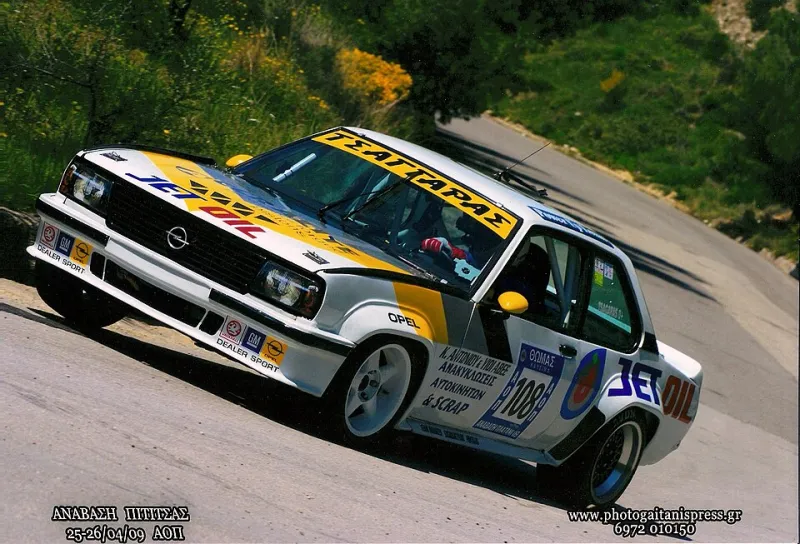
Your First Hill: Taking a Classic from Driveway to the Bo'ness Start Line
Photo: SchmalspurDVZO, CC BY-SA 4.0, via Wikimedia Commons
There is a particular moment at the Bo'ness Revival when a spectator looks at the hill, looks at the car park and starts doing mental arithmetic. The car is already in the garage. The hill is right there. Could I actually enter? The answer is usually maybe, and the difference between maybe and a signed-on entry is mostly paperwork, preparation and a realistic sense of what the day involves.
Start with the regulations, not the rev counter
The first mistake is buying parts before reading the rules. Hillclimb regulations are written to keep competition fair and safe, not to catch people out. For a historic car, the key questions are age, specification and safety equipment. A standard road-going classic may fit a production or road-going class. A modified car may fit a specialist or modified class. A car with period competition history may have its own place. The event regulations and class list are the place to start, and the eligibility secretary is there to answer questions before you spend money.
Bo'ness is a hillclimb, not a circuit race. That changes the preparation. You are running solo against the clock on a narrow, undulating course. You need a car that starts, stops, steers and behaves predictably from cold. You do not need a race engine with a narrow power band and a taste for expensive fuel. A well-sorted standard car is often more fun than an over-modified one on a hill like Kinneil.
Eligibility: what counts as a historic hillclimb car?
Eligibility depends on the event and the organising club, so there is no single answer for every classic. In broad terms, the car needs to comply with the class it enters and the safety requirements of the event. Originality can matter in some classes. In others, sensible period-style modifications are accepted. What matters is that you declare what you have and do not turn up with a car that does not match its entry.
For a Scottish owner, it is worth talking to clubs that already run hillclimbs and speed events. They know which classes are healthy, which cars are competitive and which events suit a first-timer. A standard MGB, an Imp, an Escort, a Mini or a well-kept sports car from the 1960s and 1970s can all find a home, but the details matter. Check the regulations for the specific event rather than relying on what someone did five years ago.
Licences, clubs and the paperwork chain
To compete in UK hillclimbs, you will need a Motorsport UK competition licence appropriate to speed events, plus membership of an organising club. The exact grade depends on the event and your experience, so check with the organisers before applying. The paperwork chain usually runs: join a club, apply for the licence, enter the event, complete the entry form accurately, and bring the right documents to signing-on.
Do not leave this to the week before. Licence applications take time. Entries fill up. Vehicle documents may need to be produced. If your car is road legal, bring what the regulations ask for. If it is a trailer queen, make sure the paperwork still matches the car in front of the scruntineer. A calm folder of documents is worth more than a boot full of spare parts you cannot identify.
Scrutineering: the calm checklist
Scrutineering is not a trap. It is a conversation with someone who wants your car to be safe. Before the event, read the safety requirements and prepare the car properly. Typical items include a timing strut, a suitable helmet, flame-resistant overalls, a fire extinguisher, battery isolation where required, towing eyes, secure seat belts and no loose items in the cockpit. Some events ask for more; some historic classes have specific allowances. The regulations are the source of truth.
Pay attention to the small things. A throttle return spring that looks tired. A brake pedal that is longer than you remember. A battery that is not properly secured. A fuel line that has been weeping since the last MOT. Scrutineering will find them, and so will the hill. Fix them at home, in daylight, with a cup of tea nearby. It is much less stressful than fixing them in a queue at Kinneil.
Pick the right class
Class selection is part engineering, part honesty. Capacity, age, modification level and tyre type all matter. A car entered in the wrong class can be moved, but it is better to get it right first time. If you are new, choose a class where you will have company and a realistic benchmark. There is no shame in being at the back of a competitive class in your first season. The hill will teach you more than a lap time will.
Ask the eligibility secretary what they recommend. Ask other competitors what they run. Ask yourself whether you want to develop the car or just enjoy it. Hillclimbing rewards consistency. A standard car driven well is a lovely thing to watch, and it is an even better thing to drive.
Scottish practicalities
Bo'ness brings its own realities. The weather can change between signing-on and your first run. The paddock is historic parkland, not a purpose-built pit lane, so bring groundsheets, layers and a sense of humour. Transport matters: trailer or drive? If you are driving to the event, think about tyres, tools, fuel and what happens if the car decides it has had enough. If you are trailering, check the route and the paddock arrangements.
Noise and ground clearance are worth checking before the day. Kinneil is not a smooth airfield. A low-slung car may need a careful line on the access roads. A noisy car may need silencing to meet the event limits. And because this is Scotland, pack waterproofs for the driver as well as the car. A wet hillclimb is not a disaster. It is just a different kind of competition.
The money question
Competing is not free, but hillclimbing can be one of the more accessible corners of motorsport. Budget for club membership, licence, entry fee, safety equipment, transport and consumables. Safety gear can be bought second-hand if it is in date and meets the regulations, but check before you buy. Entry fees vary by event. Travel and accommodation add up if you are coming from outside the Forth Valley. Set a budget, include a contingency and do not pretend the tyres are free.
Compared with a full circuit season, a few hillclimbs can be done on a sensible budget. The car does not need to be a dedicated racer. The event does not last three days. The biggest cost is often the preparation you choose to do, not the entry itself. Be honest about what you need and what you want.
Your first run
On the day, walk the course if the event allows it. Listen to the briefing. Ask questions. Check your tyre pressures when the car is cold. Know where the finish is and what to do after it. The first run is for learning the hill, not setting a record. Brake earlier than you think. Look through the corners. Keep the car tidy. The second run will be faster because you will know where the road goes.
Bo'ness is a hill that rewards smoothness and punishes showing off. It is also a hill that welcomes newcomers who have prepared properly. If you have watched from the bank and wondered whether your classic belongs on the start line, the answer is worth investigating. Read the regulations, talk to the club, prepare the car and enter. The worst that happens is you spend a day in the paddock learning how much you still have to learn. The best is that you come back next year with a stopwatch and a grin.