The Hill You Can Hear From the Pavement: Sound Rules at Bo'ness
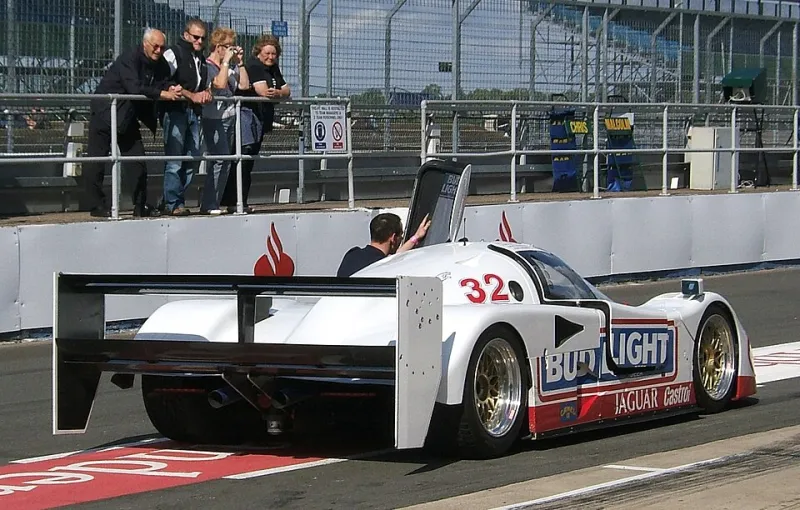
There is a particular moment at Bo'ness when the hill stops being a place and becomes a noise. A revs-check, a bark, a distant crack as a car comes through the trees — and half the paddock looks up without being told. Sound is part of the theatre. It is also part of the paperwork.
That tension is not unique to Scotland, but it feels sharper here. The Revival runs in a landscape people live and walk in. Kinneil Estate is not a purpose-built test track in the middle of nowhere; it has edges, neighbours and a council with an interest in what happens inside them. The result is a balancing act that every competitor signs up to, whether they realise it or not: keep the character, keep the noise inside the lines.
The meter is not a vibe check
At a hillclimb, noise is assessed in two broad ways. The first is the static test: a meter placed at a set distance and angle from the exhaust, usually with the engine held at a specified speed. The second is drive-by monitoring, which catches the car doing what it actually does — pulling hard, loading the engine, and making the kind of noise a stationary test can only guess at.
The static figure is the one competitors tend to quote, but it is not the whole story. A car can pass a static check and still raise eyebrows under load, because exhaust noise is only one ingredient. Induction roar, mechanical clatter, supercharger whine and the way a tailpipe points at a nearby wall all shape what the human ear — and the meter — receives.
That is why the paddock conversation about noise is rarely just about one number. It is about a car's whole voice.
Where the noise actually comes from
Historic racing engines are not designed to be quiet. They are designed to breathe, and often to sound like they mean it. A tuned A-series, a big-capacity V8, a screaming twin-cam or a supercharged special all produce a signature that owners are rightly proud of.
But pride and compliance can coexist. The most common culprits are straightforward:
- Tired silencer packing. Repackable boxes lose their effectiveness over time. What sounded acceptable in March can be noticeably sharper by July.
- Straight-through systems. A lovely idea in a YouTube clip, a less lovely one at 7am in a residential edge of Falkirk district.
- Blown joints and cracked manifolds. A small leak before the silencer can turn a rich exhaust note into a flat, cracking bark.
- Intake noise. Open filters and unshielded induction can add a hard edge that the exhaust test never sees.
- Tailpipe direction. A pipe aimed at a fence, a marquee or a scrutineering bay can amplify the reading without changing the engine at all.
The fix is rarely glamorous. New packing, a properly sealed joint, a sensible baffle and a tailpipe turned away from sensitive surfaces will do more than a last-minute panic purchase.
The neighbour question
Here is the uncomfortable truth: a hillclimb does not exist only for the people competing in it. The sound that thrills a spectator at the top of the hill may be the sound that interrupts a Sunday lunch half a mile away. Local authorities and event organisers know this. Planning conditions, environmental health interest and good old-fashioned community relations all sit behind the rules that competitors experience as a noise test.
That does not mean the hill should be silenced. It means the hill has to be a good neighbour. Bo'ness has a long history of motorsport, but it also has a long history of being a place where people live. The two facts are not enemies. They are a negotiation.
Competitors can help with small, unglamorous things: arriving with a car that has been prepared rather than just started, respecting paddock revving limits, not treating the queue for scrutineering as a sound-off, and recognising that a marshal asking you to shut down is not making a personal comment about your exhaust.
Keeping the good noise
If you want a historic engine to stay on the right side of the rules without losing its character, start before the event. Check the silencer packing, inspect the joints, and test the car in the condition it will actually run — warm, under load, with the same tailpipe and air filter you plan to use. A phone app is not a substitute for a proper meter, but it can tell you whether something has changed since last time.
At the hill, be honest about revs. Static tests are usually done at a specified engine speed for a reason; bouncing it off the limiter in the paddock may impress nobody and annoy everybody. If your car is marginal, carry a spare baffle or a repack kit. If you know your exhaust has a sharp edge at certain revs, short-shift past the sensitive bit near the start line. These are not compromises to be ashamed of. They are the same sort of preparation as checking tyre pressures.
And if you are a spectator, enjoy the noise while it lasts — but understand that the people running the event are not trying to ruin your day. They are trying to make sure there is another one.
A soundtrack worth defending
A hillclimb without sound would be a strange, hollow thing. The atmosphere at Bo'ness is built from engines, voices, footsteps on tarmac and the occasional distant clatter of a spanner. But atmosphere is not a licence to ignore the world beyond the fence.
The best historic motorsport understands that. It keeps the glorious stuff — the bark, the whine, the crackle on the overrun — and manages it with care. That is the delicate politics of sound at Bo'ness: not a war between noise and silence, but a long, practical argument about how to keep a hill worth listening to.
Get that right, and the soundtrack survives. Get it wrong, and the hill gets quieter for everyone.