Eight Machines That Had No Business Being Quick at Bo'ness
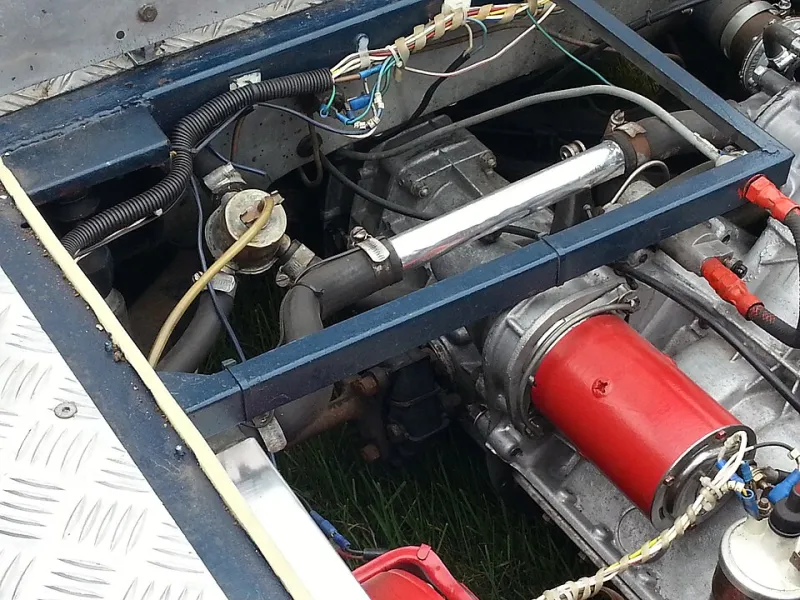
Photo: Andy Dingley, CC BY-SA 4.0, via Wikimedia Commons
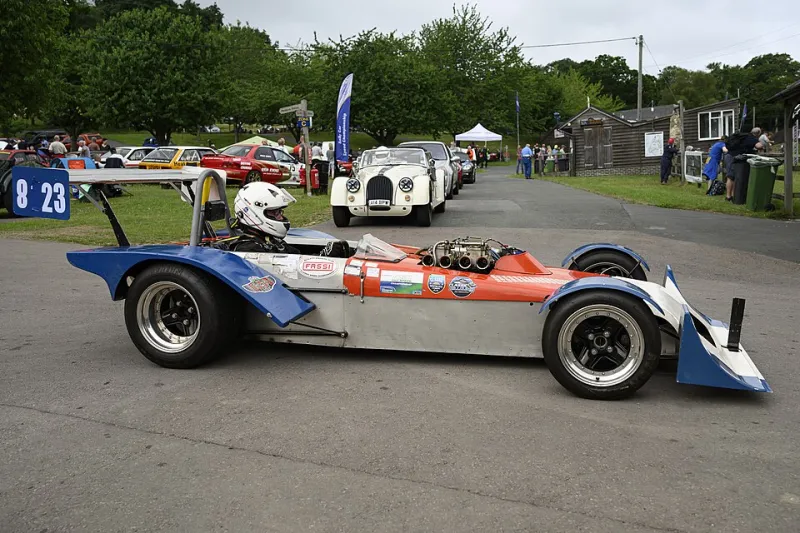
The hill at Kinneil doesn't care what badge is on your bonnet. It cares about weight, grip and whether the driver has the nerve to commit before the gradient starts flattening out. That's why, over the decades, some genuinely peculiar machinery has turned up at Bo'ness and gone surprisingly well.
Here are eight of the good ones — plus a lesson in each for anyone still persuading themselves that their project needs another fifty horsepower.
1. The Mk1 Ford Transit
Yes, really. A van. The first-generation Transit was a working vehicle with a front-mounted V4 and a live axle, which sounds like the worst possible starting point for a hillclimb — right up until you remember that a short-wheelbase empty van weighs less than a modern hatchback and puts its driver roughly over the back axle.
The lesson: ballast and seating position are free. Where you sit changes how a car behaves more than most people ever admit.
2. The Morris Minor That Grew Up
A standard 948cc Minor is not a hillclimb weapon. A Minor with a 1275, a decent cam and a lowered front end is a different conversation entirely. The shell is stiff enough, the steering is direct, and the whole thing weighs about as much as a large washing machine.
The lesson: the cheapest speed in historic motorsport is a lighter car, not a louder one.
3. The Saab 96 Two-Stroke
A small Swedish two-stroke with a freewheel gearbox and front-wheel drive sounds like a novelty. Driven properly, with the engine kept buzzing in its narrow power band, it's a reminder that momentum is a skill. Two-strokes don't like being off the pipe, so the driver has to be tidy — which is exactly what a short steep hill rewards.
The lesson: gearing and commitment beat displacement. Learn your bandwidth and live inside it.
4. The Hillman Imp
Rear-engined, aluminium, and famously light at the nose. Convention says tail-happy. Ask anyone who has watched a well-sorted Imp at a Scottish venue and they'll tell you the weight over the driven wheels does an awful lot of useful work on a climb. The Imp's reputation for trouble was always more about the people who worked on them than the layout itself.
The lesson: don't inherit other people's prejudices. A layout that's wrong on a roundabout can be right on a hill.
5. The Trials Special
Long before road-based cars dominated, hillclimbing and trialling shared a paddock. Cars like the Dellow and its many imitators were built from a spaceframe, a Ford sidevalve and a set of big, skinny, aggressive tyres — designed to climb something considerably worse than Kinneil. Seeing one scrambling up tarmac is an education in traction over horsepower.
The lesson: the earliest hillclimb cars were built for exactly this. Look backwards before you look at catalogues.
6. The Riley 1.5
A proper little saloon with a twin-carb 1.5 and semi-elliptic springs, the Riley was a police car in its day and a club competitor soon afterwards. Nothing exotic, nothing fragile, and just enough power to make the driver think about the rear axle rather than the rev counter.
The lesson: a well-understood car with predictable behaviour will embarrass a difficult car every time on a short hill.
7. The Skoda Estelle
Rear-engined, cheap, mocked relentlessly for twenty years, and now quietly admired by people who have actually driven one quickly. Light, simple, and with the engine hung out behind the axle where the grip is. On a steep, twisty climb the layout starts making a certain amount of sense.
The lesson: the cheapest car in the paddock is often the one having the most fun. Also: check the front suspension properly, because everyone forgets the front.
8. The Triumph Herald Estate With a Bigger Heart
Herald chassis, Spitfire running gear, a body that was designed for a 948 and now has rather more to think about. It's the most common story in British club motorsport — take something small, bolt in something larger, then spend two seasons sorting out the consequences of your own enthusiasm.
The lesson: the swap is easy. The sorting out is the project. Budget your time accordingly.
The Thread Running Through All Eight
Look down that list and the pattern is obvious. None of these cars are fast in a straight line for very long. What they share is low weight, short gearing, a driver willing to use every inch of the course, and an owner who long ago stopped caring what the bloke at the car show thought.
Bo'ness has always been comfortable with that kind of machinery. The hill asks a simple question — can you get up it, and can you get up it quickly — and it doesn't much mind whether you arrive in a works special or a van with a plank in the back.
Which is, frankly, the most Scottish motorsport attitude available.