Bloodline on the Brae: Three Families Who Hand Bo’ness Down the Generations
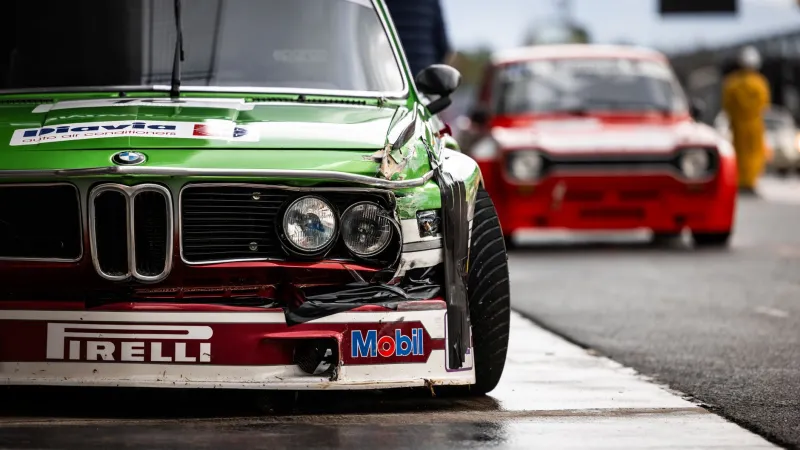
Every hillclimb has its characters. Bo’ness has dynasties. You notice it around ten in the morning, when the paddock has stopped being a car park and started being a village: a lad in a boilersuit holding a torque wrench for his grandad, a woman on the bank with a clipboard she inherited along with the waterproof trousers, a father and daughter arguing cheerfully over whether the tyre pressures should go up or down before the first practice run.
Historic motorsport likes to talk about continuity in terms of cars. At Bo’ness it is really about people. Here are three families who keep coming back up the brae — and what the rest of us can pinch from the way they do it.
The Fairlies: Spanners First, Stories Second
Ken Fairlie has been coming to the hill since he was tall enough to see over a cockpit. His father sprinted a modified Ford Pop in the days when the entry list read like a scrapyard inventory, and Ken’s daughter Isla now runs a very tidy Mk1 Escort that the family describes, with some affection, as “the expensive one”.
Their ritual is unglamorous and utterly fixed. Saturday morning begins with a bacon roll from the same trailer, eaten standing up, followed by fifteen minutes of Ken walking round the car saying nothing at all. Isla reckons he has never once failed to find something. “He’ll tap a wing, look at me, and say ‘that’ll do’ or ‘that won’t’. That’s the whole briefing.”
The tool that matters is not the shiny one. It’s a stubby Whitworth spanner, worn smooth, that lives in a canvas roll and has been to every meeting since the 1970s. Nobody uses it much any more. It goes in the box anyway, because — as Ken puts it — “you don’t leave the good luck at home.”
The tall tale in the Fairlie household concerns a certain escape road, a certain damp Saturday and a certain Pop that allegedly finished the run backwards. The details shift each time it’s told. Isla has heard it so often she can time the punchline. She also knows the useful version, which is the one about not being brave on cold tyres.
The Rankines: The Clipboard Passes Down
Not every Bo’ness family arrives with a trailer. The Rankines arrive with a flask, a folding chair and a hi-vis jacket that has seen better decades. Moira Rankine has marshalled on the same stretch of bank for so long that she refers to individual tufts of grass as if they were old colleagues. Her son Euan now stands two posts along. Her mother stood roughly where the rescue unit parks.
What gets handed down here isn’t machinery — it’s judgement. When to wave a yellow, when to leave well alone, when a spin is just a spin and when it deserves a word in the ear afterwards. Moira’s rule is simple: “Watch the driver’s hands, not the car. The car tells you what happened. The hands tell you what’s about to.”
Euan learned the job the way most marshals do — by being shouted at gently from thirty yards away. He also inherited the family’s second great tradition: the post-meeting debrief in the car park, conducted over tea, in which every incident is relived and every decision politely second-guessed. Newcomers are welcome. In fact, newcomers are the point. The Rankines have recruited at least four marshals over the years simply by offering a brew and a bit of shelter from the wind.
If you want to understand how a hill like Bo’ness survives, this is the unglamorous answer. Someone has to stand on the bank in November. Families like the Rankines make that feel less like duty and more like belonging.
The Dodds: Tea, Tape and a Thousand Small Jobs
The Dodds are the family you notice only when something goes wrong — which is precisely why they’re worth noticing. Grandfather Alec scrutineered for years. His son Paul now runs a small prep business out of a double garage, and granddaughter Erin is the one with the laptop, the label printer and a worrying enthusiasm for spreadsheets.
Their contribution is logistics. The spare throttle cable that appears just as yours has snapped. The roll of self-amalgamating tape produced before you’ve finished asking. The quiet word about where to sign in. At any given meeting, the Dodds’ awning functions as a sort of unofficial parts counter and information desk, staffed by whoever isn’t currently under a car.
Alec’s legacy is a battered tin box labelled, in peeling Letraset, ‘SMALL BITS’. It contains washers, fuses, split pins and, improbably, a small brass tap. Nobody knows what the tap is for. Everyone agrees it should stay. Erin has digitised the inventory, which caused a minor family row, and now keeps a laminated copy on the table — partly for efficiency, mostly to wind up her dad.
The stories here are gentler: the time a borrowed distributor cap saved a championship, the meeting when the kettle ran dry at precisely the wrong moment. But the lesson is sharp enough. Preparation isn’t glamorous, and it’s the reason the glamorous bits happen at all.
What the Dynasties Teach a Newcomer
Three families, three different currencies — know-how, vigilance and kit — but the same underlying message. Historic hillclimbing isn’t sustained by nostalgia. It’s sustained by people turning up, year after year, and by the small courtesies that make turning up feel worthwhile.
So if you’re new to Bo’ness, borrow a habit from each of them. Ask the person next to you what they’re checking and why. Volunteer for a post, even a boring one, and see the hill from the other side of the rope. Pack the bits you’d want if someone else’s day depended on it.
And don’t be surprised if, a few meetings down the line, you find yourself explaining to a wide-eyed child exactly why that particular spanner goes in the box. That’s how a hill stays alive. Not in the programme, not in the records — but in the passing of a flask, a tool and a story from one pair of hands to the next.